Kung Pao Chicken — diced chicken, peanuts & dried chillies in a sweet-sour Sichuan sauce
“The smoky snap of charred chilli, the crunch of a peanut.”
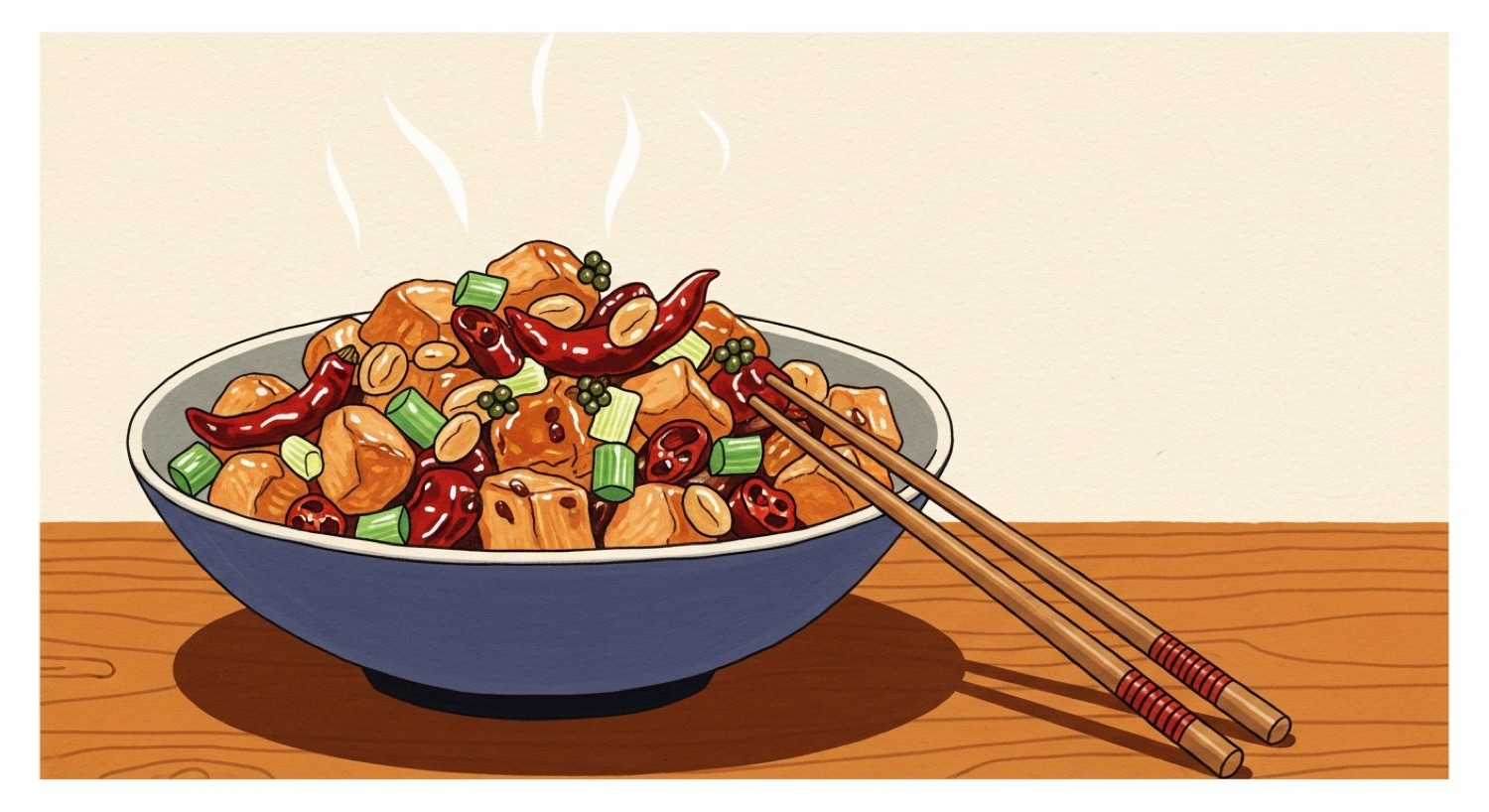
Sichuan’s crowd-pleaser
After mapo tofu, kung pao chicken (宫保鸡丁) is the best-loved Sichuan dish in the world — diced chicken stir-fried at a roar with dried chillies, Sichuan pepper and roasted peanuts, bound in a glossy sauce that’s savoury first, with a gentle sweet-and-sour lift the Chinese call 荔枝味 (“lychee flavour”).
It’s named after Ding Baozhen, a Qing-dynasty governor of Sichuan whose honorary court title was 宫保 (Gōngbǎo, “Palace Guardian”); 鸡丁 simply means “diced chicken.” The real thing is a world away from the sweet, gloopy takeaway version — and it comes together in about half an hour. And because this is WillyChina, you’ll learn to say it too.
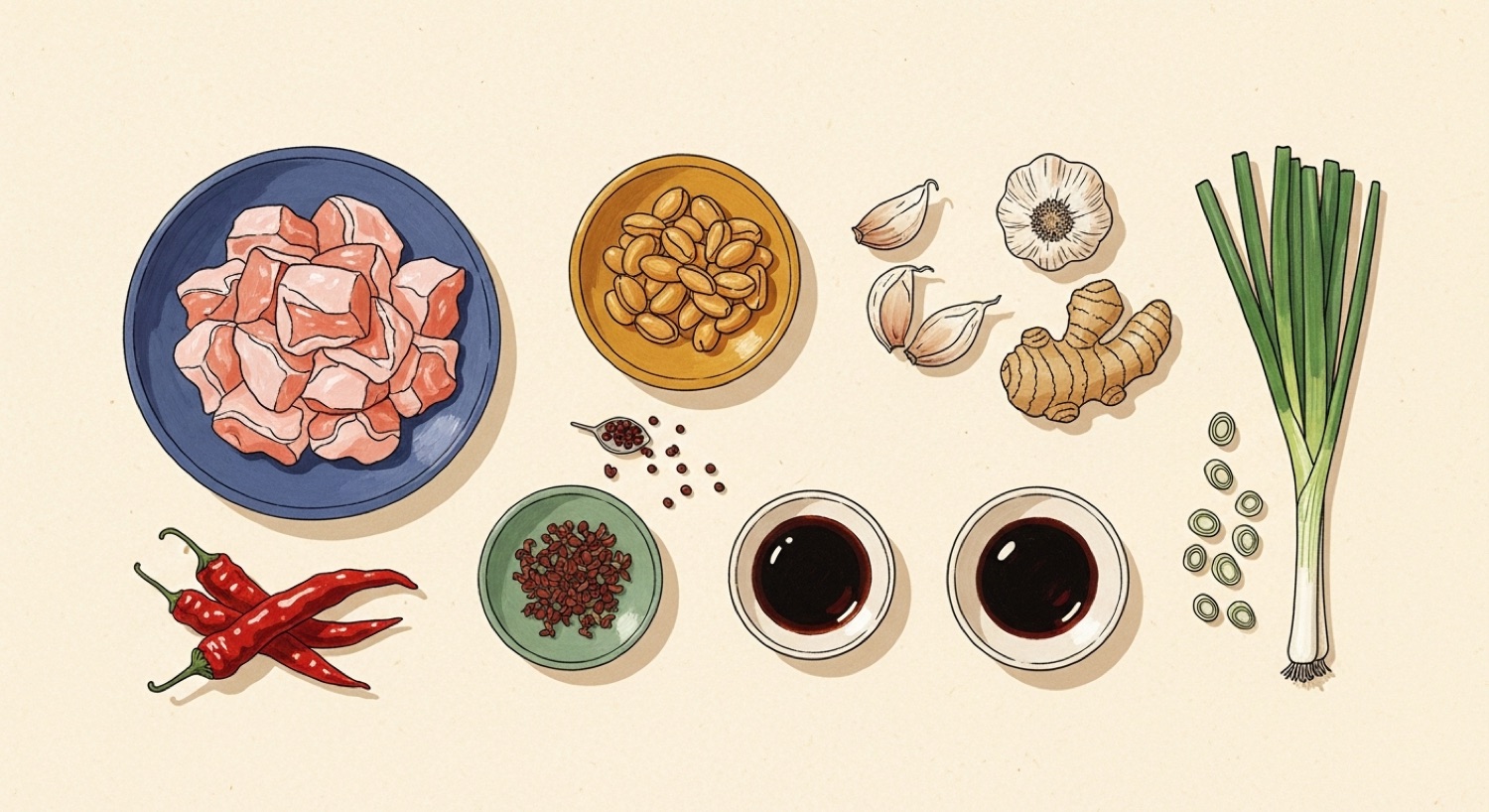
Sichuan Kung Pao Chicken
The chicken & its marinade
- 400 g boneless chicken thigh, in 1.5 cm dice — 鸡肉
- 1 tbsp light soy sauce — 酱油
- 1 tsp Shaoxing wine + 1 tsp cornflour, pinch of salt
The sauce
- 1 tbsp Chinkiang black vinegar — 醋
- 1 tbsp light soy sauce · 2 tsp sugar
- 1 tsp cornflour + 2 tbsp water or stock
The stir-fry
- 10 dried red chillies, snipped, seeds shaken out — 辣椒
- 1 tsp Sichuan peppercorns — 花椒
- 3 cloves garlic, sliced · 1 tbsp ginger — 姜
- 3 spring onions (white parts), in chunks — 葱
- 75 g roasted peanuts — 花生
- 2 tbsp neutral oil
Method
- Marinate the chicken. Toss the diced chicken with the soy, Shaoxing wine, cornflour and salt. Leave 15 minutes — the cornflour velvets it, keeping it silky and tender through a hot, fast fry.
- Mix the sauce. Stir the vinegar, soy, sugar, cornflour and water together in a small bowl and keep it by the stove. A stir-fry moves fast, so everything should be ready before the wok gets hot.
- Wake the chillies. Heat the oil over medium and add the dried chillies and Sichuan peppercorns. Fry just 20–30 seconds, until fragrant and the chillies darken a shade — not black. This smoky note, 煳辣 (húlà, “scorched-chilli”), is the soul of the dish.
- Sear the chicken. Turn the heat to high, add the chicken, spread it out and let it sear before stirring. Stir-fry until just cooked through, about 3–4 minutes.
- Add the aromatics. Toss in the garlic, ginger and spring-onion whites and stir 30 seconds until fragrant.
- Sauce it. Give the sauce a stir and pour it in. Toss for about a minute until it thickens to a glossy coat on every piece.
- Peanuts last. Off the heat, stir through the roasted peanuts so they stay crunchy. Serve straight away, with plenty of steamed rice.
Per serving (approx., 4 servings): 340 kcal · 26 g protein · 20 g fat · 14 g carbs (before rice). A rough estimate for guidance only.
Balance beats heat
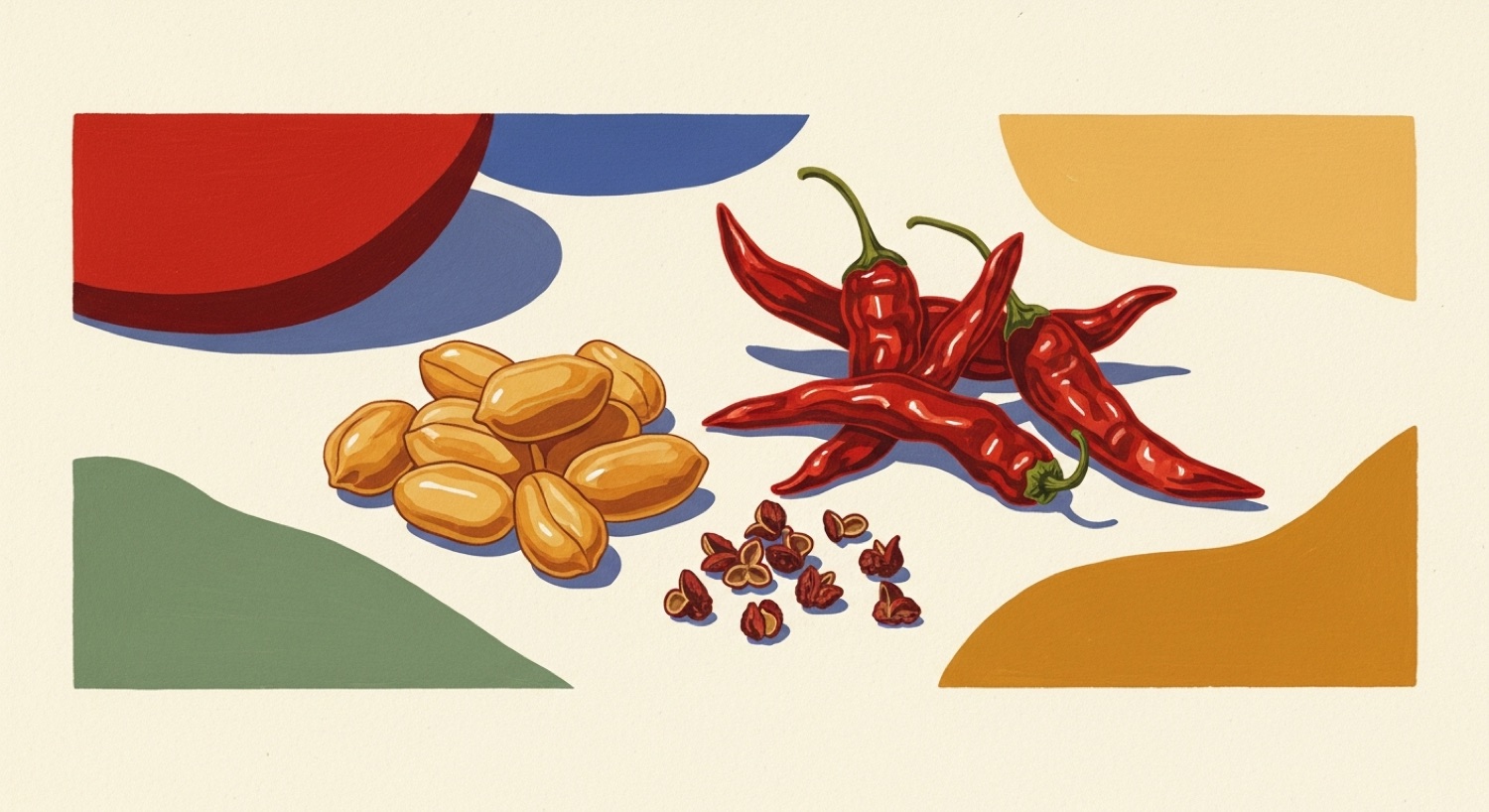
Great kung pao isn’t about brute chilli. The dried chillies are there for aroma more than fire — shake the seeds out and fry them briefly, and you get a warm, smoky perfume rather than raw heat. The real magic is the sauce balance: a savoury soy base lifted by just enough sugar and black vinegar to make your mouth water. Chinese cooks call that gentle sweet-sour lilt 荔枝味 — “lychee flavour.”
And the peanuts go in at the very end, off the heat. Stir them through so they stay crisp; cook them in the sauce and they turn soft, losing the crunch that plays against the tender chicken. Get those two things right — the balanced sauce and the last-minute peanuts — and it tastes like a Chengdu restaurant.
Say it in Chinese
The dish, its key parts and the words for the table — tap to hear each.
Tips & variations
- Thigh vs breast. Thigh stays juicier; breast works well too if you velvet it and don’t overcook. The cornflour marinade is the key to tender meat.
- Nut allergy? Cashews are the classic swap for peanuts — or simply leave them out; the dish still sings.
- Dial the heat. The seeds are where the fire lives — shake them out for aroma without burn, or leave some in for more kick.
- Prep first. Stir-frying is fast and furious: dice, marinate and mix the sauce before the wok goes on, and it’s easy.
FAQs
Learn to order it — and cook it — in Mandarin
Food is the tastiest way into a language. Practise real Mandarin, dishes and all, in 1-on-1 online lessons with a native speaker.
Book a Free Intro Call