Sichuan Cuisine — the boldest, most beloved of China’s regional kitchens
“一菜一格,百菜百味 — one dish, one style; a hundred dishes, a hundred flavours.”
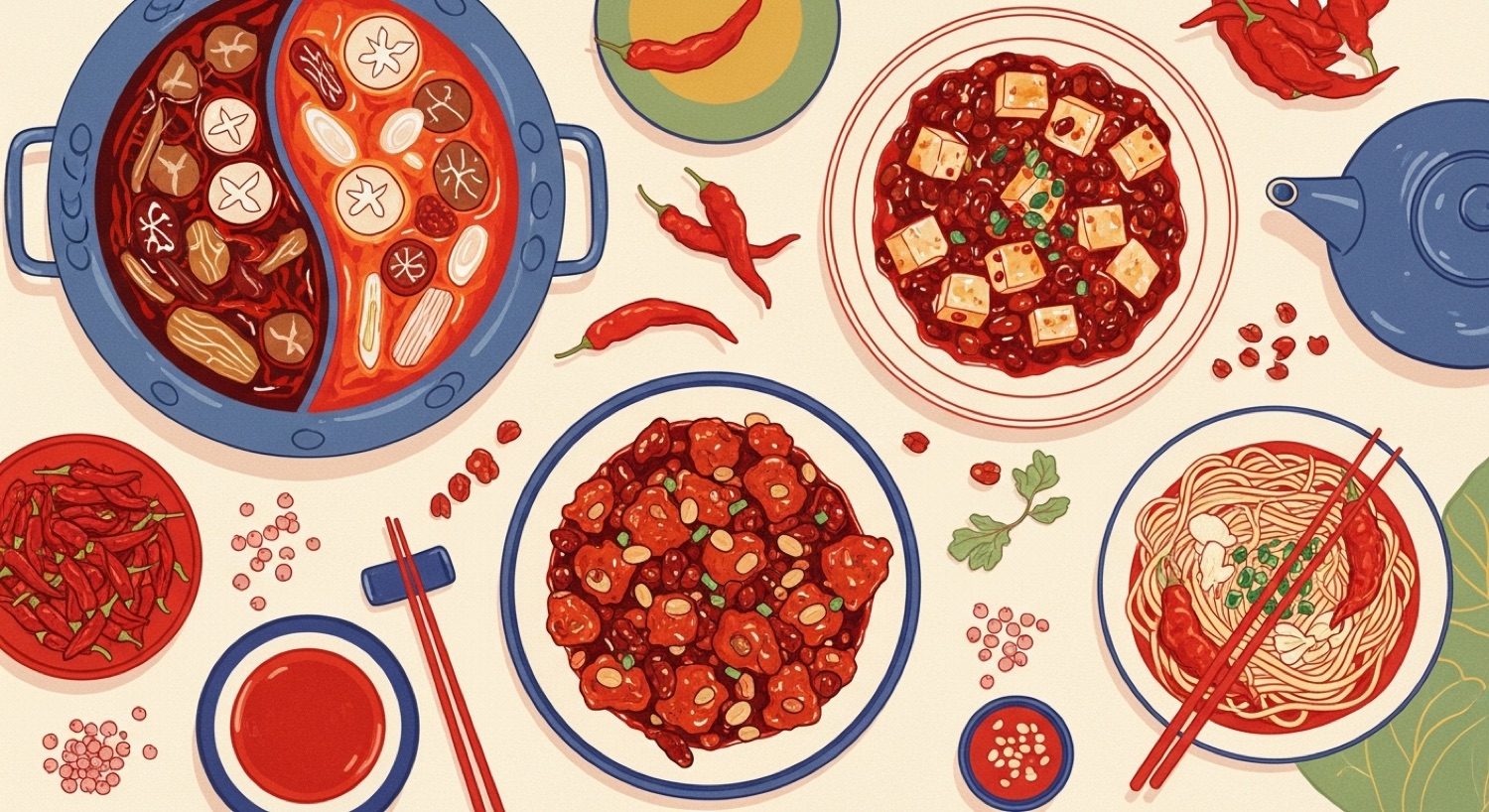
- Region
- Sichuan & Chongqing, SW China
- Signature flavour
- 麻辣 málà — numbing-spicy
- Key spice
- Sichuan peppercorn 花椒
- Best known for
- Hot pot · Mapo tofu
- Status
- One of the 八大菜系
- Nickname
- 天府之国 “land of plenty”
The boldest kitchen in China
Sichuan cuisine (川菜, Chuāncài) is the most famous — and probably the most loved — of China’s eight great regional cuisines. Born in the fertile Sichuan basin, the “land of plenty” (天府之国), it’s known the world over for one unmistakable sensation: málà, the tingling, numbing heat that makes your lips buzz.
But heat is only half the story. Sichuan cooks prize complexity — a saying goes 一菜一格,百菜百味, “one dish, one style; a hundred dishes, a hundred flavours.” Sweet, sour, salty, bitter, fragrant and numbing are layered and balanced with a boldness no other cuisine attempts.
What exactly is málà?
麻辣 (málà) is two sensations working together. The má (麻, “numbing”) comes from the Sichuan peppercorn (花椒, huājiāo) — not a chilli at all, but a citrusy husk that fizzes on the tongue like a mild electric current. The là (辣, “spicy”) is the chilli heat, usually from dried red chillies and 豆瓣酱 (dòubànjiàng), the fermented broad-bean-and-chilli paste that is the soul of the cuisine.
Not everything is fiery. Sichuan’s genius is range: 鱼香 (yúxiāng, “fish-fragrant”) is sweet-sour and garlicky with no fish at all; 怪味 (guàiwèi, “strange flavour”) balances all five tastes at once. There’s a Sichuan dish for every palate.
Chilli, peppercorn & the damp
Here’s a surprise: the chilli isn’t native to China at all. It arrived from the Americas only about four centuries ago, in the Ming dynasty — and Sichuan took to it like nowhere else. Before the chilli, cooks built heat and fragrance from the native Sichuan peppercorn (花椒) and fermented pastes; the chilli simply gave them a thrilling new dimension.
There’s a reason it stuck. The Sichuan basin is humid and often fog-bound, and locals will tell you the heat “drives out the damp” (祛湿) — chilli here is half seasoning, half folk medicine. The true soul of the kitchen, though, is 豆瓣酱 (dòubànjiàng), the fermented broad-bean-and-chilli paste from Pixian, aged for months until it turns a deep, savoury red; a spoonful is the backbone of mapo tofu and countless braises.
Sichuan cooks formally recognise more than twenty distinct flavour profiles (味型) — from 麻辣 (numbing-spicy) to 鱼香 (fish-fragrant) and 怪味 (strange-flavour). It’s this vocabulary of taste, not just the heat, that makes it a great cuisine.
Iconic Sichuan dishes
火锅 Hot Pot
The communal cauldron of numbing-spicy broth — Chongqing’s gift to the world.
Recipe soon →麻婆豆腐 Mapo Tofu
Silken tofu in a glossy, numbing chilli-bean sauce — Sichuan in a single bowl.
Recipe soon →宫保鸡丁 Kung Pao Chicken
Sweet-sour-spicy chicken with peanuts and dried chillies.
Recipe soon →担担面 Dan Dan Noodles
Springy noodles under a fiery, sesame-rich sauce.
Recipe soon →回锅肉 Twice-Cooked Pork
Pork simmered, sliced and stir-fried with leeks and bean paste — a home classic.
Recipe soon →鱼香肉丝 Fish-Fragrant Pork
Slivered pork in the sweet-sour-garlicky “fish-fragrant” sauce.
Recipe soon →The words to know
Order like a local — tap the speaker to hear each.
川菜
Chuāncài
Sichuan cuisine
麻辣
málà
numbing-spicy
花椒
huājiāo
Sichuan peppercorn
好辣!
hǎo là
So spicy!
FAQs
Order it — and cook it — in Mandarin
Food is the tastiest way into a language. Practise real Mandarin, dishes and all, in 1-on-1 online lessons with a native speaker.
Book a Free Intro Call