A Guide to Jiangsu (江苏): Ancient Capitals, Classical Gardens & Huaiyang Cuisine
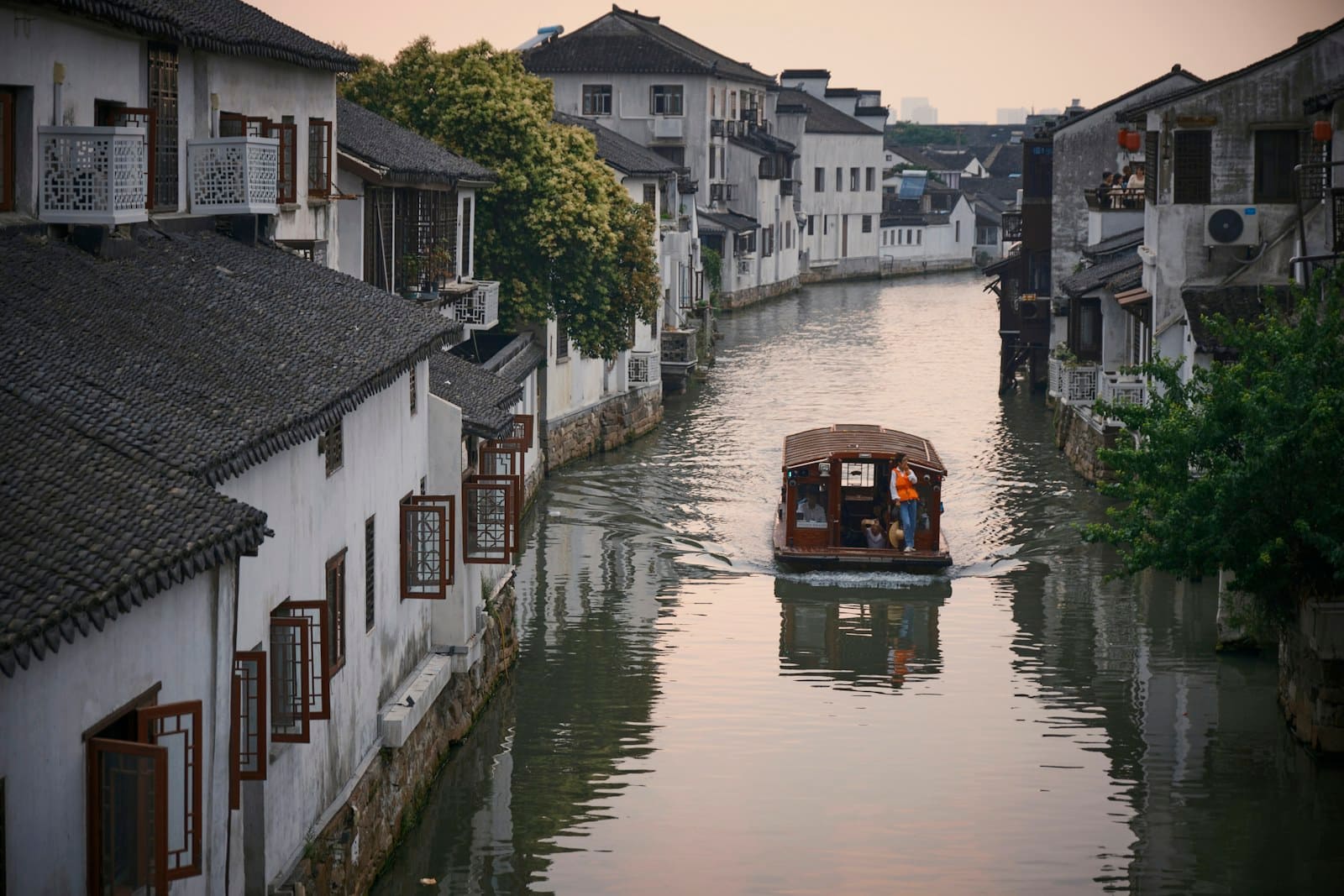
If Shanghai is the face of modern China and Zhejiang its entrepreneur’s engine, Jiangsu (江苏 Jiāngsū) is its cultural spine. The province north and west of Shanghai packs more history per square kilometre than almost anywhere on earth: four ancient capitals, China’s richest collection of classical gardens, the birthplace of one of its great cuisines, and a Mandarin accent that once set the standard for the entire empire.
For Mandarin learners, Jiangsu is where language and literature converge. The Tang and Song poems you read in class were often about Suzhou’s canals and Yangzhou’s gardens. Nanjing’s accent shaped China’s administrative language for five centuries. This guide covers the history, the language landscape, the food, four cities worth your time, and what all of it means for your Mandarin.
A brief history of Jiangsu
Jiangsu’s recorded history reaches back to the Spring and Autumn period, when the lower Yangtze valley was the kingdom of Wu. Suzhou — then called Gūsū (姑苏) — was the Wu capital, its walls and waterways already celebrated in texts that predate Confucius. Sun Zi, tradition holds, trained troops for the Wu king nearby; the region has been a centre of strategic thinking ever since.
Six separate dynasties made Nanjing their capital. The most consequential was the early Ming dynasty: the Hóngwǔ Emperor founded the dynasty here in 1368, built the longest city wall in the world — large sections still stand today — and anchored the most powerful state of its era. Admiral Zheng He launched his seven great ocean voyages from Nanjing’s dockyards between 1405 and 1433, reaching as far as East Africa. Later, Nanjing briefly became the Republic of China’s capital in 1912 and again in 1927. The Nanjing Massacre of 1937, in which Japanese forces killed hundreds of thousands of civilians over six weeks, remains one of the defining tragedies of modern Chinese history; the Memorial Hall built on the site is among China’s most visited and most sobering monuments.
In the south, Suzhou spent the Song, Yuan and Ming dynasties accumulating the private gardens for which it is now famous worldwide. Retired officials, prosperous merchants and scholarly recluses each carved their ideal world from a city block — a distillation of mountains, water, calligraphy, and poetry into a half-acre courtyard. Nine of these gardens are now collectively a UNESCO World Heritage Site. The tradition of Jiangnan (江南) culture — the storied “south of the river” aesthetic of refinement, learning and subtle beauty — has its deepest roots here.
Jianghuai Mandarin and Wu dialects
Jiangsu sits at one of China’s great linguistic fault lines. The province’s south — Suzhou, Wuxi, Changzhou — belongs to the Wu dialect family (吴语 Wúyǔ), the same language group as Shanghainese. Wu Chinese keeps voiced consonants that Mandarin lost centuries ago, runs on a different tone system, and is so distinct from Mandarin that a Beijing native overhearing a Suzhou conversation will catch almost nothing. The Suzhou dialect in particular has a famously melodic, softened quality that has been celebrated in Chinese poetry for a thousand years.
Move north into Nanjing, Yangzhou, Zhenjiang and the Huai River basin, and the language shifts entirely to Jianghuai Mandarin (江淮官话 Jiānghuái Guānhuà). This variety of Mandarin sits close to standard Pǔtōnghuà — Nanjing speakers are regularly cited as having one of China’s clearest, most careful accents. The historical reason is significant: Nanjing Mandarin (Nánjīng Guānhuà) was the prestige variety of the Ming imperial court and served as the basis for administrative Chinese across East Asia for several centuries. When Jesuit missionaries learned to speak “Mandarin” in the 1600s, it was largely Nanjing Mandarin they were learning.
For visitors and Mandarin learners, the practical picture is simple: Standard Mandarin is universal throughout Jiangsu, even in heavily Wu-speaking Suzhou. Residents code-switch graciously. But if you have any interest in dialect diversity, Jiangsu is one of the most fascinating single provinces to explore — you can hear Wu and Mandarin coexist within a single afternoon in Suzhou.
Phrases worth knowing in Jiangsu
Six Mandarin phrases that earn their keep in the gardens, along the canals and at the table. Tap 🔊 for native audio.
Huaiyang cuisine: the emperor’s table
Huaiyang cuisine (淮扬菜 Huáiyáng cài) is one of China’s Four Great Culinary Traditions and the one most closely associated with imperial banqueting. Born in the waterway cities of Yangzhou and Huai’an along the Grand Canal, it prizes knife technique, seasonal freshness and delicate sweetness over heat and spice. Where Sichuan shouts, Huaiyang murmurs.
The cuisine’s most celebrated quality is its knife work: a master Huaiyang chef can cut silken tofu into strands finer than thread, score a whole fish so that its flesh fans open like a squirrel’s tail in the wok, or slice pork belly into hundreds of individual layers. At Jiangsu’s finest banquets, the first act is visual.
Say the menu
Tap 🔊 to hear each dish in Mandarin:
Notable cities of Jiangsu
Jiangsu’s major cities are strung along the Yangtze River and the ancient Grand Canal — close enough to visit in sequence, each with a strikingly different character:

Nanjing南京
Nanjing’s name means “Southern Capital” and it has earned that title repeatedly: six dynasties planted their courts here, and the city still carries the weight of all that history with quiet dignity. The Ming city wall — the longest ever built, at 35 kilometres — still rings the old city. Purple Mountain (紫金山) shelters the Sun Yat-sen Mausoleum and the Ming Xiaoling Tomb behind its forested slopes. The Nanjing Massacre Memorial Hall is essential, sobering and brilliantly curated.
Modern Nanjing is a university city — it has more universities per capita than almost any other in China — with a lively café culture, superb museums and the kind of considered, unhurried pace that comes from a city that knows exactly what it is. The salt-water duck is magnificent.
Deep-dive guide coming soon
Suzhou苏州
Suzhou has been called “heaven on earth” since the Tang dynasty, and in one specific sense it earns the description: no city on earth has a denser concentration of classical garden art. The nine UNESCO-listed gardens — including the Humble Administrator’s Garden (拙政园) and the Lingering Garden (留园) — are private universes of rock, water, pavilion and calligraphy, each designed to compress an entire landscape into a courtyard. Spend at least two full days; the light changes everything.
Beyond the gardens, Suzhou is a working silk city — the Suzhou Silk Museum is one of China’s finest — and its old quarter of Pingjiang Road, with its whitewashed houses and stone-bridged canals, gives an idea of what the whole city once looked like.
Deep-dive guide coming soon
Wuxi无锡
Wuxi sits on the northern shore of Taihu Lake — China’s third-largest freshwater lake — and uses both faces well: the lake side is lotus flowers, fishing villages and the giant 88-metre bronze Grand Buddha at Lingshan (灵山大佛); the city side is one of China’s most important semiconductor and IoT manufacturing clusters. This combination — ancient landscape, modern industry — is quintessentially Jiangnan.
The historic Xihui Park links Huishan Temple, a Qing-dynasty opera stage and the imperial garden that inspired Suzhou’s own Jichang Garden. Wuxi is easy from Suzhou on the high-speed train: twenty minutes.
Deep-dive guide coming soon
Yangzhou扬州
Yangzhou was once one of the wealthiest cities in the world. As the main junction of the Grand Canal and the Yangtze, salt merchants, poets and emperors converged here; the Qianlong Emperor visited six times. That prosperity built the Slender West Lake (瘦西湖) — a narrow, elegantly gardened waterway designed to out-charm Hangzhou’s West Lake, which it very nearly does — and gave Huaiyang cuisine its most ambitious kitchens.
Today Yangzhou is unhurried and genuinely lovely: the old town’s lanes, the morning tea houses where dumplings and millet porridge are still the day’s first ritual, and the calmly beautiful Ge Garden (个园) — built around bamboo and sculpted rocks — make this one of the most underrated cities on the Jiangnan circuit.
Deep-dive guide coming soonIconic attractions across Jiangsu
Five Jiangsu landmarks worth building a trip around — including the province’s UNESCO listing and its most historically resonant sites:
Suzhou Classical Gardens 苏州园林
Nine private gardens collectively listed as a UNESCO World Heritage Site since 1997 (expanded 2000). The Humble Administrator’s Garden (拙政园) is the largest; the Master of the Nets Garden (网师园) the most intimate. Each is a complete aesthetic world — allow a full day for two or three of them, not an hour each.
Sun Yat-sen Mausoleum 中山陵
Set on the forested slopes of Purple Mountain (紫金山), this 1929 mausoleum of the Republic of China’s founder is one of China’s great architectural statements: 392 stone steps rising through Ming-style gates to the blue-domed memorial hall, with the city laid out far below. Go on a weekday morning for the quiet it deserves.
Nanjing Massacre Memorial Hall 侵华日军南京大屠杀遇难同胞纪念馆
Built on the site of one of the massacre’s mass graves, this is China’s most sobering museum — meticulously curated, architecturally powerful and essential to understanding 20th-century history. Entry is free. Allow two hours and come prepared for something deeply serious.
Slender West Lake 瘦西湖
Yangzhou’s answer to Hangzhou’s West Lake — a narrow, garden-lined waterway dotted with pavilions, moon bridges and the five-pavilion White Pagoda. The Qianlong Emperor reportedly complained it almost made him forget the original. Best at dawn, before the tour groups, when willows trail in still water.
Lingshan Grand Buddha & Taihu Lake 灵山大佛 · 太湖
The 88-metre bronze Sakyamuni Buddha at Lingshan (near Wuxi) is one of the largest in the world and set against the broad backdrop of Taihu Lake — China’s third-largest freshwater lake. The lakeside villages, tea gardens and fishing communities around Taihu are among the most scenic and least touristed landscapes in eastern China.
Famous figures of Jiangsu
A province of writers, navigators and statesmen whose work shaped Chinese civilisation — and one or two who reshaped the world.
Zheng He (郑和)
The great Ming admiral launched all seven of his ocean expeditions from Nanjing, commanding fleets of hundreds of ships that reached the Persian Gulf and East Africa — the most ambitious maritime programme the pre-modern world had seen. His story is inseparable from Jiangsu.
Wu Chengen (吴承恩)
Born in Huai’an, Jiangsu, Wu Chengen wrote Journey to the West (西游记) — the story of Sun Wukong, the Monkey King — which became one of the Four Great Classical Novels of Chinese literature and the most enduring mythology in Chinese popular culture.
Cao Xueqin (曹雪芹)
The author of Dream of the Red Chamber (红楼梦) — widely considered the greatest novel in Chinese literature — had deep family roots in Nanjing. The novel’s fictional Jinling (金陵) is an idealised Nanjing, and its opulent household scenes draw on the author’s memories of Jiangnan grandeur.
Fan Zhongyan (范仲淹)
Born in Suzhou, Fan Zhongyan was the Northern Song’s most admired official-scholar — a reformer, military commander and poet whose “Memorial on Yueyang Tower” (岳阳楼记) is still memorised by Chinese schoolchildren: “Be the first to bear the world’s worries; be the last to enjoy its pleasures.”
Xu Beihong (徐悲鸿)
Born in Yixing, Xu Beihong became one of modern China’s most influential artists and teachers — famous above all for his galloping ink horses and for fusing Chinese brushwork with Western technique.
Xu Xiake (徐霞客)
The great Ming explorer from Jiangyin spent decades roaming China on foot; his meticulous Travel Diaries (徐霞客游记) are treasured as both geography and literature.
Jiangsu’s modern economy & global role
Jiangsu is China’s second-largest provincial economy by GDP and, by most measures, the wealthiest of its coastal provinces in per-capita terms. The Yangtze River Delta cluster — Shanghai, Suzhou, Nanjing and the cities between them — is one of the world’s most productive manufacturing and technology regions.
Semiconductors & IoT
Wuxi and Nanjing host major semiconductor fabrication plants (including SMIC facilities), photovoltaic manufacturing and a fast-growing Internet of Things cluster. Suzhou Industrial Park, co-developed with Singapore from 1994, became one of China’s most successful economic zones and a model for later developments across the country.
Textiles & Silk
Suzhou has produced silk for 2,500 years. The industry modernised without losing its craft dimension: embroidered silk artwork from Suzhou — where a single piece can take years to complete — commands prices at international auction. Mass textile manufacturing underpins the broader Yangtze Delta export machine.
Nanjing Financial Hub
Nanjing is a regional financial centre and the seat of the provincial government. Its educated population — more universities per capita than almost any Chinese city — feeds a growing financial services, logistics and advanced manufacturing sector. The city sends more students to overseas universities than almost any other provincial capital.
Grand Canal Legacy
The Grand Canal (大运河), which runs the length of Jiangsu, remains a working commercial waterway two millennia after it was first dug. Container barges still pass through Yangzhou, Zhenjiang and Suzhou daily — a living inheritance that no other province can match for continuous operational use.
Why Jiangsu matters for Mandarin learners
Jianghuai Mandarin is one of China’s clearest accents. Nanjing speakers enunciate their tones carefully and their vocabulary is standard — the same accent that educated the Ming dynasty’s diplomats and missionaries for three centuries. If you want immersive practice in a city where your Mandarin will be both understood and gently modelled for you, Nanjing is an excellent choice.
Classical literature comes alive here. The Tang poems about Suzhou’s canals, the Song lyrics about Yangzhou’s lantern festivals, the Ming novels whose heroes wander Nanjing’s streets — knowing even a little Mandarin transforms Jiangsu from a beautiful place into a legible one. Phrases you learnt in HSK classes suddenly appear on wall plaques and temple gates in their original context.
Business Mandarin has a natural home here. As one of China’s wealthiest provinces, Jiangsu is where manufacturing, technology and commerce intersect. If your goal is professional Mandarin in a tech or trade context, Suzhou Industrial Park and Nanjing’s business district offer some of the country’s most dynamic professional environments.
Wu dialect is a fascinating counterpoint. Jiangsu offers learners something rare: two distinct Chinese language systems coexisting in the same province. You can study standard Mandarin in Nanjing, then spend an afternoon in a Suzhou tea house overhearing Wu — the contrast is both linguistically illuminating and a reminder of how much diversity standard Mandarin holds together.
Wherever you’re starting from, our guide to the HSK levels maps the road ahead, and the free Mandarin level test finds your current position in ten minutes.
Visiting Jiangsu — practical notes
Getting there: Nanjing Lukou International Airport has domestic connections everywhere and growing international routes; Suzhou is most easily reached via Shanghai Hongqiao (45 minutes on the high-speed train). The province has excellent rail coverage — all four of the main cities in this guide are on the same HSR corridor.
Getting around: Nanjing and Suzhou both have modern metro systems. High-speed trains connect Nanjing, Zhenjiang, Changzhou, Wuxi and Suzhou in under 90 minutes end to end. Yangzhou requires a cross-river train via Nanjing South or a direct service from Shanghai. All inter-city travel is straightforward and inexpensive.
When to come: Spring (March to May) for peach blossom and the soft green of new leaves in the gardens; autumn (September to November) for clear skies, lower humidity and the chrysanthemum season. Summer is hot and humid but spectacular for Taihu lotus flowers. Winters are grey and relatively quiet — ideal for museums and tea houses.
Language in practice: In Nanjing, Mandarin is universal and the accent is easy to follow. In Suzhou, residents may default to Wu dialect with each other but will switch to Mandarin instantly for any visitor. English signage is reliable in major tourist zones; a few key phrases in Mandarin go an exceptionally long way.
One week in Jiangsu: Three nights in Nanjing (Purple Mountain, the city wall, the Massacre Memorial Hall, old Qinhuai quarter), two nights in Suzhou (two or three gardens, Pingjiang Road), half a day in Wuxi, half a day in Yangzhou. The itinerary fits the rail network perfectly.