A brief history of Guangdong
Guangdong sits where China meets the South China Sea — a position that has shaped every chapter of its history. According to the Wikipedia history of Guangdong, the region was originally home to the ancient Baiyue peoples and was only absorbed into the Chinese empire under the Qin dynasty in 214 BCE. For most of imperial history, the Cantonese-speaking south sat at a cultural distance from the Mandarin-speaking northern capitals — close enough to ship goods to, far enough to develop its own identity.
That coastal position made Guangzhou (known to Europeans as Canton) one of the great trading ports of Asia. Foreign merchants — Arab, Persian, Portuguese, British — were trading here as far back as the Tang dynasty. By the 19th century the city was the centre of Chinese tea, silk and porcelain exports, and the European appetite for those goods triggered the Opium Wars and the chain of “unequal treaties” that opened China to foreign trade.
If Beijing wrote China’s imperial history and Shanghai wrote its colonial-modern story, Guangdong wrote both its ancient trade routes and its 21st-century manufacturing miracle.
Guangdong has also been the principal source of overseas Chinese communities worldwide. Australians of Chinese descent — particularly those whose families came during the 19th-century gold rushes — overwhelmingly trace their roots to four small counties in Pearl River Delta Guangdong, known collectively as Sze Yup (四邑, Sìyì). It is the reason the Chinatowns of Sydney, Melbourne, San Francisco, Vancouver and London have historically spoken Cantonese rather than Mandarin.
The modern chapter began in 1980, when Deng Xiaoping designated Shenzhen — then a small fishing town across the border from Hong Kong — as China’s first Special Economic Zone. Within four decades it had grown into a tech megacity rivalling Silicon Valley. For wider context on where Guangdong sits in Chinese geography, see our guide to China’s provinces.
Cantonese and Standard Mandarin
This is the section every Mandarin learner with a Cantonese-speaking family member or local Chinatown should read first. Cantonese — or 廣東話 (Gwóngdūng wá) in its own name — is not a “dialect” of Mandarin in any linguistically meaningful sense. It is a separate spoken Chinese language, part of the Yue language family, and it is the dominant home language across Guangdong, Hong Kong and Macau.
The contrast with Mandarin is substantial. Cantonese has six to nine tones depending on how you count, compared to Mandarin’s four. It preserves consonants Mandarin lost more than a millennium ago — final stops like -p, -t, -k that classical Chinese poetry was written for. Cantonese vocabulary often differs in everyday usage too: 食 (“eat”) instead of Mandarin 吃, 行 (“walk”) instead of 走, 飲 (“drink”) instead of 喝. A Mandarin speaker arriving in Guangzhou with no Cantonese exposure follows roughly nothing of a local conversation.
The practical good news for learners: Standard Mandarin is universal in Guangdong. All education is Mandarin-medium, all signage is Mandarin, and most working-age people are bilingual. You will be understood in Mandarin everywhere — though you will hear Cantonese constantly underneath, especially in markets, on buses and around family tables. Guangdong also hosts smaller Hakka and Teochew language communities, particularly in the eastern half of the province.
If you’re weighing the two as a learner, our Mandarin vs Cantonese guide covers the decision in detail. For the broader picture of China’s languages, see our guide to languages and dialects in China.
Quirky Cantonese phrases worth knowing
Six distinctly Cantonese phrases — written in traditional characters (Cantonese is usually written using traditional script) with approximate Jyutping romanisation. Tap 🔊 to hear the audio (note: audio plays the Mandarin reading; the Cantonese pronunciation given in italics is what locals actually say).
Same characters as Mandarin 你好, but pronounced “nay-ho” not “ni-hao”. The basic greeting works in both languages.
The everyday workhorse. Used for thanks for a small favour, to flag down a waiter, to apologise for bumping someone. The most common phrase you’ll hear.
Reserved for thanks for something received — a present, a meal, a meaningful favour. Use 唔該 for small things, 多謝 for genuine generosity.
The cultural one. Literally “drink tea”, but in practice means going for a long mid-morning dim sum meal with family. The defining Cantonese social ritual.
Literally “add oil”, a phrase of encouragement. Shouted at sports events, exams and anyone facing a challenge. Mandarin uses the same characters with the same meaning.
The Lunar New Year toast — said while everyone at the table lifts and tosses a raw-fish salad (yusheng) with chopsticks. The higher you toss, the more prosperous the year.
Cantonese cuisine: dim sum, roasts and slow soups
Cantonese cuisine is the version of Chinese food most Australians grew up with. Light, fresh, delicate, built on the principle that good ingredients need minimal interference — Guangdong’s chefs aim to taste the raw material, not bury it under sauce. The four pillars below are core Cantonese; the wider provincial repertoire also includes the seafood-centric Chaozhou (Teochew) tradition and the preserved, braised Hakka style. For a wider lens see our regional Chinese cuisine guide.
Dim sum
點心 · DiǎnxīnCantonese cuisine’s global ambassador — bite-sized parcels served in bamboo steamers, eaten with endless tea. Har gow (shrimp dumplings), siu mai (pork-shrimp parcels), char siu bao (BBQ pork buns), egg tarts. Eaten as 飲茶 (yum cha) from morning to early afternoon.
Char siu / roast meats
叉燒 · ChāshāoThe Cantonese roasting tradition — char siu (sweet-glazed barbecue pork), siu yuk (crisp-skin roast pork belly), siu ngo (roast goose), pak cham gai (white-cut chicken). Served on rice with pickled greens. The “siu mei” 燒味 menu hanging in shop windows.
Slow soups
老火湯 · Lǎohuǒ tāngThe Cantonese family ritual — pork bones, dried scallops, lotus root and Chinese herbs simmered for four hours until the broth tastes like the sum of every ingredient. Every Cantonese family has a soup their grandmother makes; every household keeps a clay pot for it.
Steamed fish
清蒸魚 · Qīngzhēng yúThe Cantonese restraint principle in one dish — a whole live fish, steamed for eight minutes, dressed with ginger, spring onion and a splash of soy and hot oil. The freshness of the fish is the entire point. The benchmark test of any Cantonese kitchen.
Notable cities of Guangdong
Unlike Beijing or Shanghai — which are single municipalities — Guangdong is an actual multi-city province. The Pearl River Delta alone is the world’s largest urban megalopolis, home to roughly 70 million people across nine major cities. Each has its own character:

Guangzhou廣州
Guangzhou is the 2,200-year-old port that taught China how to trade with the rest of the world. The city’s two visual icons sit on opposite banks of the Pearl River — the historic Shamian Island concession quarter on one side, and the silver pinched-waist Canton Tower on the other. In between sits the dense Tianhe CBD and Yuexiu’s old streets, where some of China’s best Cantonese restaurants have been running for a century.
Guangzhou is the cultural heart of Cantonese-speaking China. Almost every regional Australian Chinatown tradition — the food, the festivals, the language — traces back to households a short distance from this city centre.
Deep-dive guide coming soon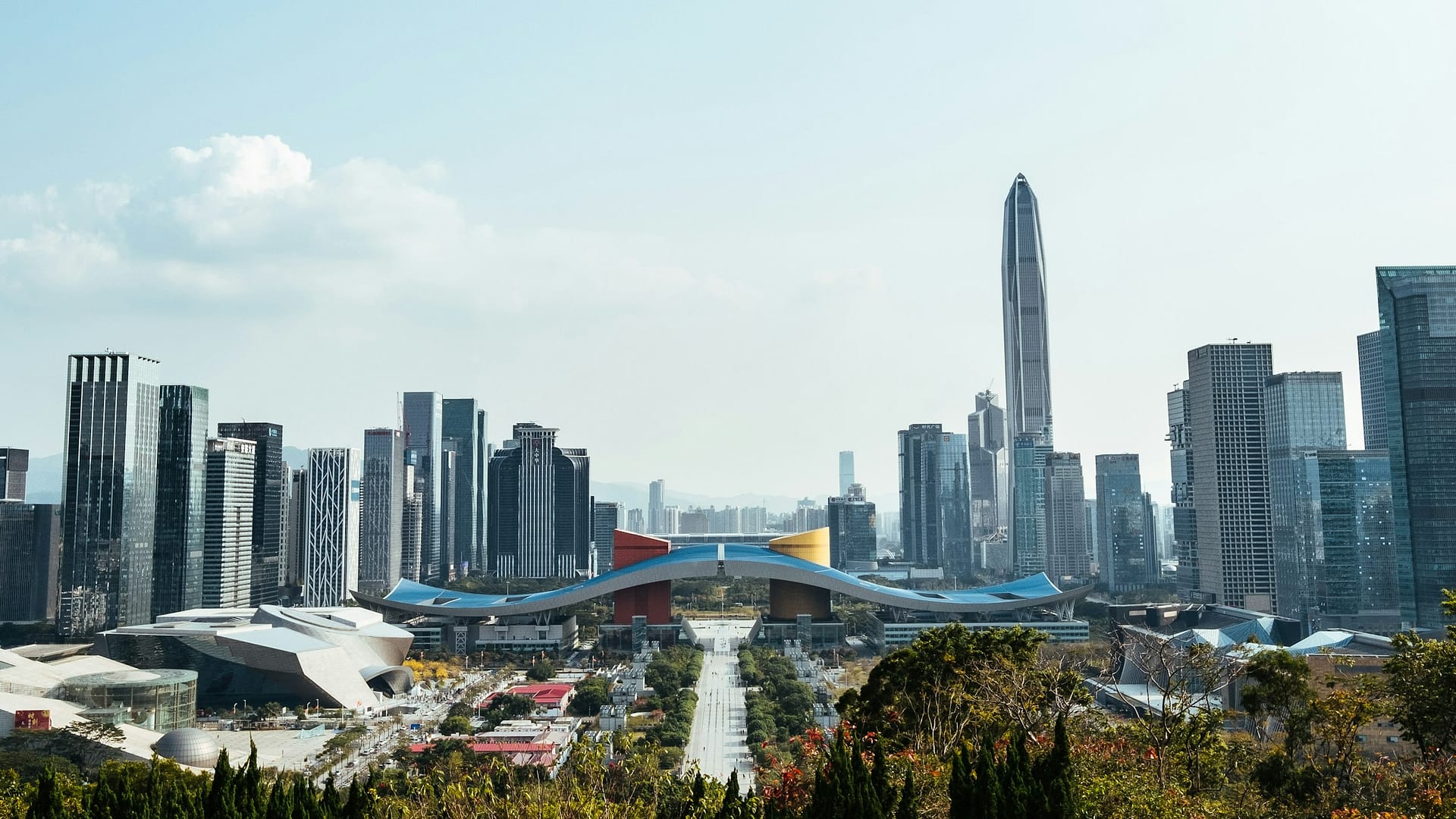
Shenzhen深圳
From fishing village to global tech megacity in forty years. Home of Huawei, Tencent, BYD, DJI and a generation of hardware start-ups. The fastest urban-growth story in modern history.
Deep-dive guide coming soon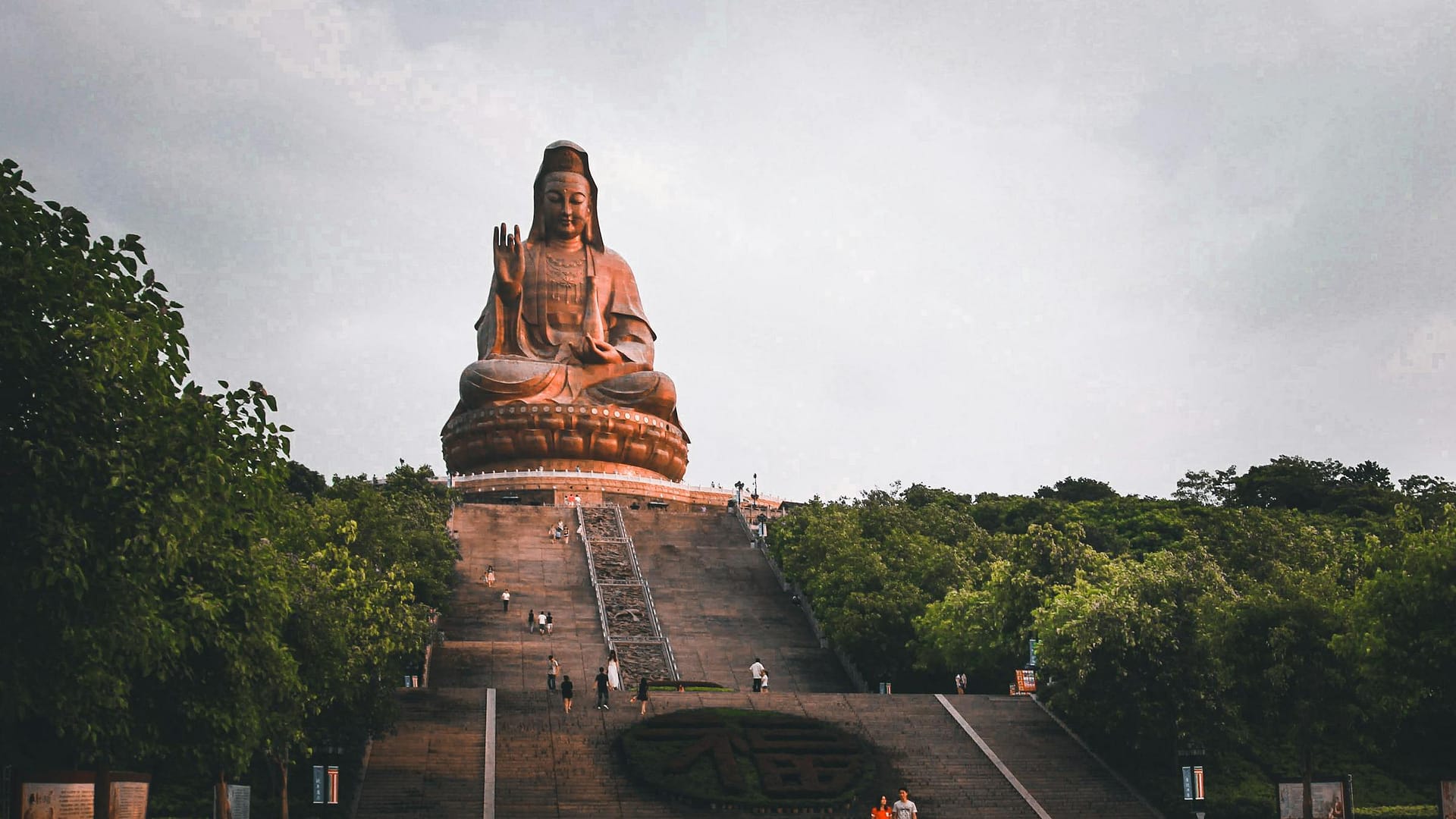
Foshan佛山
The home of Wong Fei-hung, Ip Man and Bruce Lee’s ancestral family. Foshan combines Song-dynasty heritage, the colossal Mount Xiqiao Guanyin statue, and a quietly powerful ceramics and manufacturing economy.
Deep-dive guide coming soon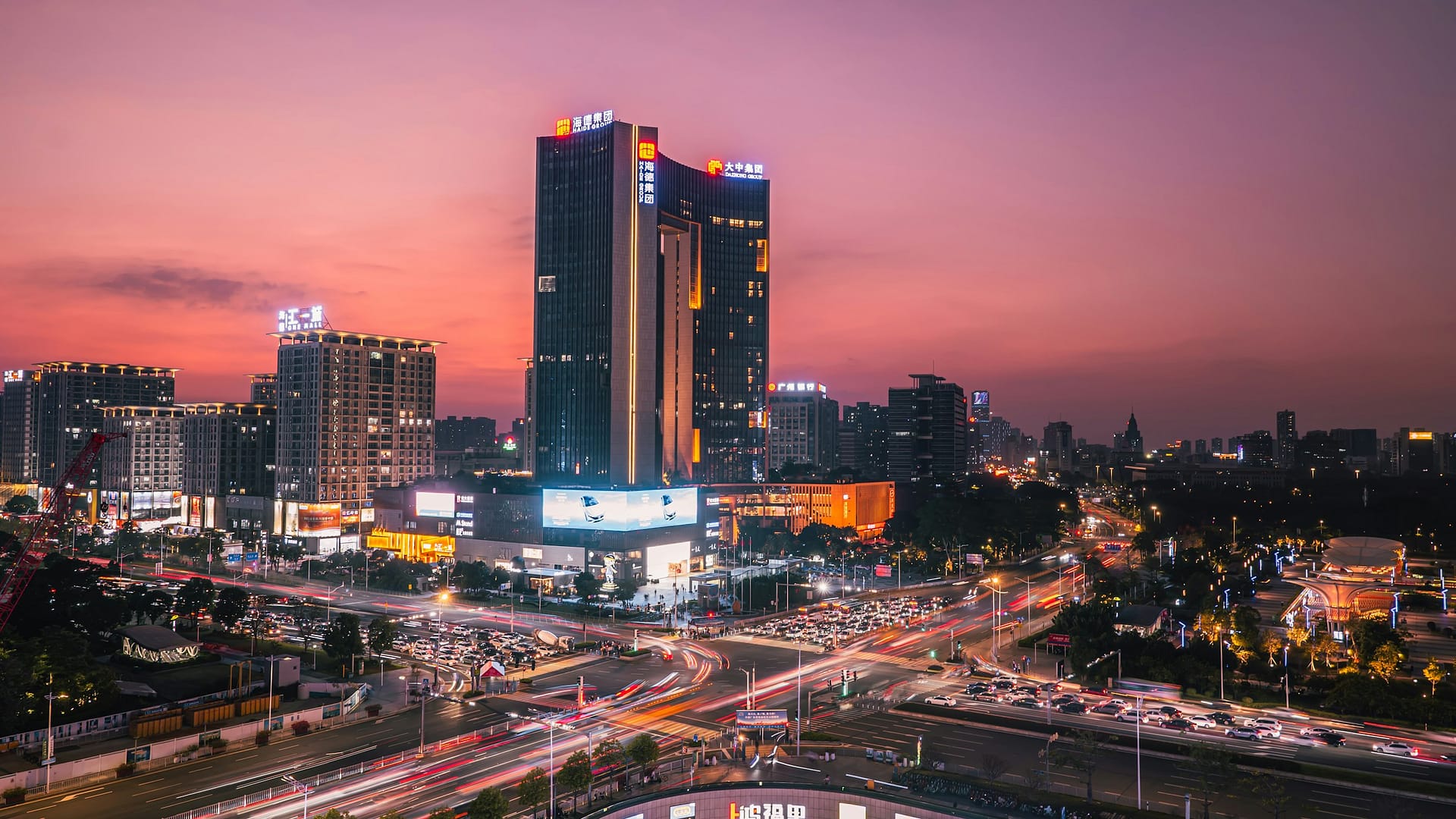
Dongguan東莞
Dongguan’s industrial parks build a meaningful share of the world’s smartphones, sneakers, toys and furniture. Less polished than its neighbours, but the city without which the global supply chain breaks.
Deep-dive guide coming soon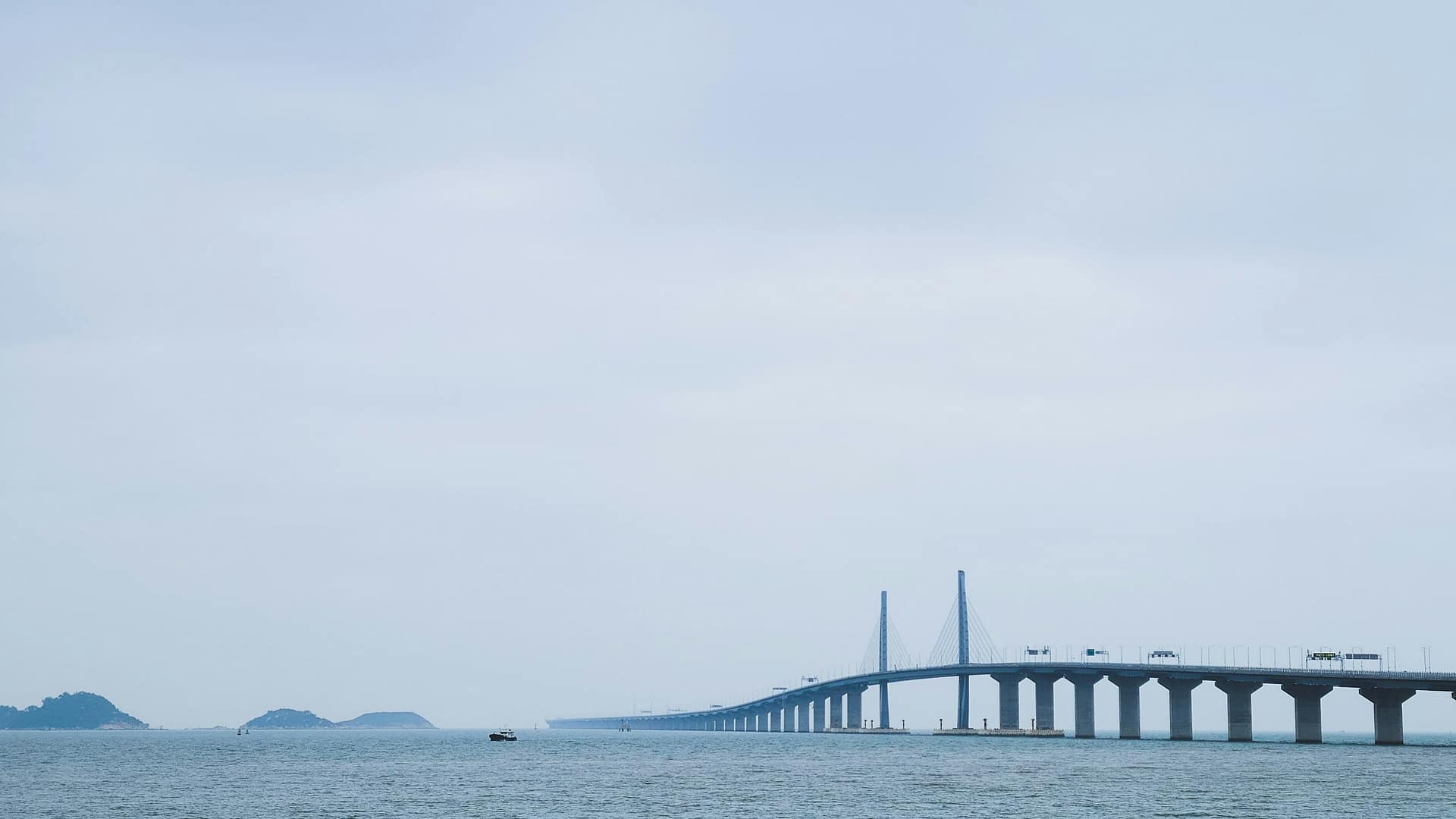
Zhuhai珠海
The greenest of the Pearl River Delta cities — leafy boulevards, beach promenades, and one end of the world’s longest sea-crossing bridge to Hong Kong and Macau.
Deep-dive guide coming soonIconic attractions across the province
Five Guangdong landmarks worth building a trip around — a mix of UNESCO natural and cultural heritage, colonial-era streetscape and modern icon:
Mount Danxia 丹霞山
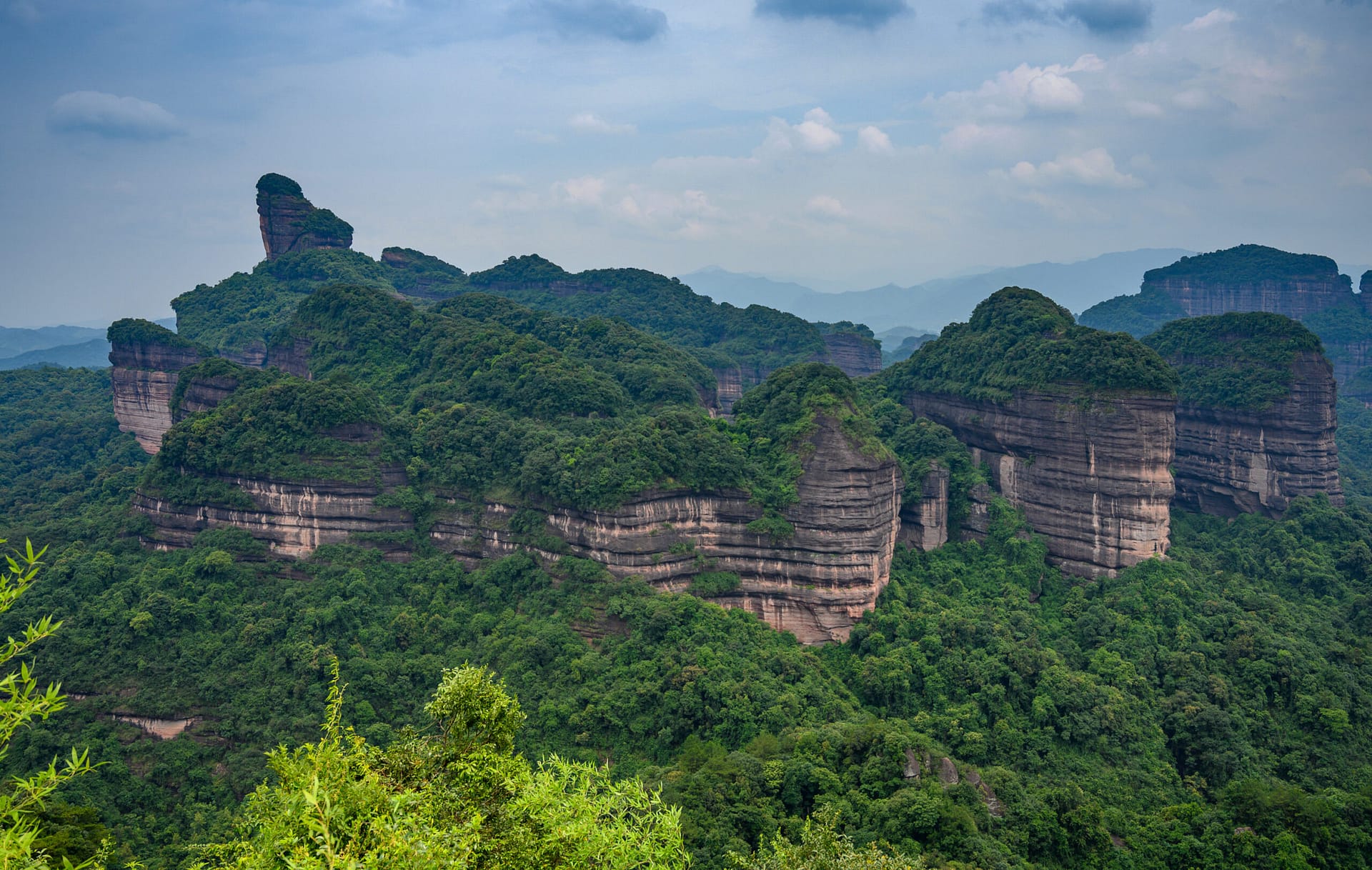
UNESCO World Heritage geological park in Shaoguan, northern Guangdong — the type-site for the “Danxia landform” of red sandstone cliffs eroded into dramatic peaks and valleys. Plan a full day; the boat trip on the Jin River shows the cliffs from below.
Canton Tower 廣州塔
The 600-metre silver pinched-waist tower on the south bank of the Pearl River — Guangzhou’s most photographed structure. Glass-bottom observation deck near the top; best visited at dusk.
Kaiping Diaolou 開平碉樓
UNESCO World Heritage — over 1,800 multi-storey fortified watchtowers scattered across Kaiping’s rural villages. Built between the 17th and early 20th centuries by returning overseas Chinese, in a wild fusion of Lingnan, Greek, Roman and Indian architectural styles.
Shamian Island 沙面
The former British and French concession island in central Guangzhou — three blocks of preserved colonial architecture, leafy plane trees and quiet cafés. The most photogenic corner of central Guangzhou for a slow afternoon walk.
Foshan Ancestral Temple 祖廟
The Song-dynasty Taoist temple at the cultural heart of Foshan — bronze sculptures, intricate wood carvings, and the lion-dance and Wing Chun martial arts heritage that put the city on the world map.
Famous Cantonese figures
Six figures born in Guangdong (or whose families were) whose work shaped modern China and its global cultural footprint.
Sun Yat-sen (孫中山)
Born in Cuiheng village outside Zhongshan, Sun overthrew the Qing dynasty in 1911 and is honoured as the father of the Republic of China by both mainland China and Taiwan.
Bruce Lee (李小龍)
Born in San Francisco to a family from Shunde, Foshan. The defining martial-arts film star of the 20th century and the man who put Cantonese kung fu on the global cultural map.
Wong Fei-hung (黃飛鴻)
The Foshan-born physician, Hung Gar master and Cantonese folk hero whose life inspired more than a hundred films, from Once Upon a Time in China to dozens of TV adaptations.
Liang Qichao (梁啟超)
Born in Xinhui, Guangdong — one of the most influential modernising thinkers of the late Qing and early Republican period. His essays shaped a generation of Chinese constitutional and political thought.
Donnie Yen (甄子丹)
Guangzhou-born star of the Ip Man series, Rogue One and dozens of Cantonese and Hollywood action films. Currently the highest-profile working Cantonese-language martial-arts performer.
Anita Mui (梅艷芳)
Hong Kong–raised with family roots in Guangdong — the defining Cantopop “Madonna of Asia” of the 1980s and 1990s, whose songs and films defined the golden era of Cantonese-language popular culture.
Guangdong’s modern economy & global role
Guangdong is China’s largest provincial economy by a wide margin — if it were a country, it would sit in the world’s top 15 by GDP. The province is the engine of Chinese manufacturing, the home of its biggest tech companies, and the proving ground for almost every economic reform of the past forty years.
Shenzhen tech ecosystem
Huawei, Tencent, BYD, DJI, ZTE — all Shenzhen-headquartered, all global category leaders. The Greater Bay Area attracts more venture capital than any other Chinese region.
The world’s factory floor
Pearl River Delta factories produce a meaningful share of the world’s electronics, apparel, toys, footwear and furniture. Dongguan and Foshan are the city-scale industrial parks behind that statistic.
Ports of Guangzhou & Shenzhen
Shenzhen Yantian and Guangzhou Nansha together rank in the global top five busiest container ports. The Pearl River estuary handles a colossal share of China’s outbound trade.
Greater Bay Area (GBA)
A national initiative integrating nine Guangdong cities with Hong Kong and Macau into a single economic region of over 80 million people. The Hong Kong–Zhuhai–Macau Bridge is its physical centrepiece.
Why Guangdong matters for Mandarin learners
The homeland of overseas Cantonese culture
Most Australian “Chinatown” Chinese culture is Cantonese culture, and it almost all traces back to small Pearl River Delta towns in Guangdong. The dim sum your local yum cha restaurant serves, the lion dances at Lunar New Year, the Cantonese spoken by your grandparents’ generation — they came here.
For a Mandarin learner, Guangdong is therefore a deeply personal stop. You will be understood in Mandarin everywhere — but you will also hear Cantonese in nearly every household, market and bus, and recognise it from kitchens and karaoke nights you already know. If you’re still deciding between languages, our Mandarin vs Cantonese guide goes deeper. And for the broader question of starting Mandarin as an adult, our guide to learning Mandarin as an adult walks through what’s involved.
Visiting Guangdong — practical notes
Best time
October to December — the post-typhoon “dry season” with cooler, drier weather. Avoid hot, humid May–August.
Getting around
High-speed rail links every major city in under 90 minutes. Each city has a deep metro network and Didi ride-share.
Visa
240-hour transit visa-free entry for many nationalities (as of 2026). Easy combo with Hong Kong / Macau.
Language
Mandarin universal; Cantonese widely heard; English better in Shenzhen / Zhuhai than further inland.
Useful Mandarin phrases — tap to hear
- 你好 (nǐhǎo)Hello
- 谢谢 (xièxie)Thank you
- 多少钱? (duōshao qián?)How much?
- 我要这个 (wǒ yào zhège)I want this
For a fuller traveller’s phrase set, see our essential Mandarin phrases for travelling to China.
Test your Guangdong knowledge
1. How many tones does Cantonese have, compared to Mandarin’s four?
2. The Cantonese phrase 唔該 (m̀h gōi) is used to:
3. Which city was designated China’s first Special Economic Zone in 1980?
Frequently asked questions
Start your Mandarin journey
Want to learn the Standard Mandarin spoken across Guangdong and the rest of China? Online 1-on-1 lessons with a native speaker.