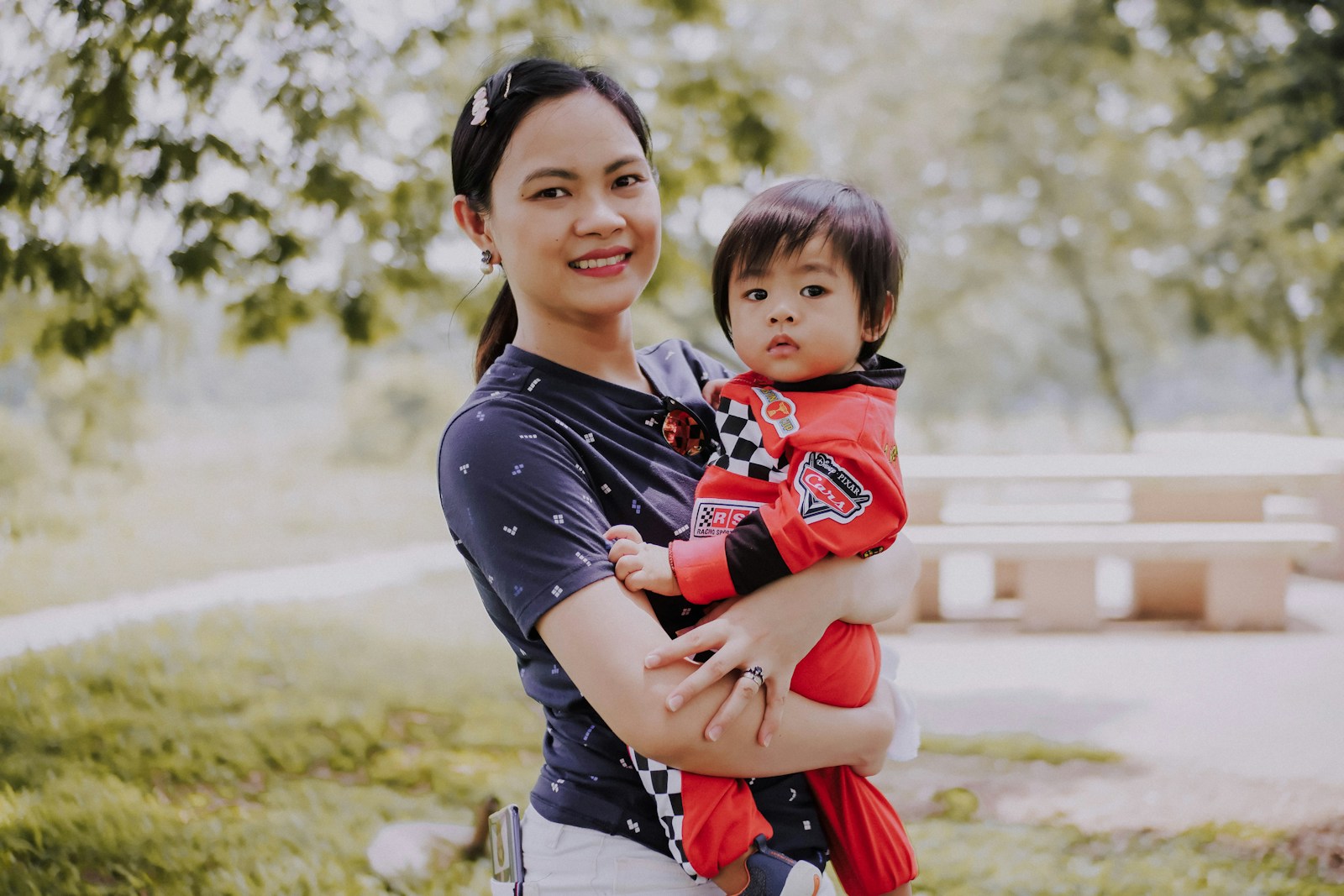
Mother’s Day is celebrated around the world — but in Chinese culture, the act of honouring your mother is not confined to a single Sunday in May. It is a lifelong practice, a moral obligation, and the very foundation of Chinese society. That practice has a name: filial piety.
What Is Filial Piety? The Meaning of 孝 (Xiào)
Filial piety — known in Mandarin as 孝 (xiào) — is the cornerstone virtue of Chinese culture. It encompasses the deep respect, care, and gratitude that children owe their parents, grandparents, and ancestors. If you could distil Chinese family values into a single concept, filial piety would be it.
The character 孝 tells the story beautifully. It is composed of two elements: 老 (lǎo), meaning “old” or “elder,” placed above 子 (zǐ), meaning “child.” Together, they depict a child carrying or supporting an elder on their back — a visual representation of the duty every generation owes the one before it.
To understand Chinese culture at any meaningful depth — whether you are learning the language, doing business in China, or reconnecting with your heritage — you must first understand 孝. It is the lens through which Chinese people view family, responsibility, and what it means to live a good life.
The Origins of Filial Piety: Confucius and the Classic of Filial Piety
Filial piety predates written records in China, but it was Confucius (孔子, Kǒngzǐ, 551–479 BCE) who elevated it to the status of supreme moral virtue. In the Analects, Confucius declared that filial piety and fraternal submission were “the root of all benevolence.” A person who did not honour their parents could not be considered truly virtuous in any other area of life.
The philosophy was later codified in the Classic of Filial Piety (孝經, Xiàojīng), a short but enormously influential text attributed to Confucius and his disciple Zengzi (曾子). The text outlines filial piety across five social classes — from the Emperor to the common person — making clear that the obligation to honour one’s parents was universal, cutting across all ranks of society.
For more than two thousand years, the Xiaojing was required reading for every educated Chinese person. Imperial examinations — the gateway to government service — tested knowledge of its principles. Emperors and peasants alike were expected to observe its teachings. The message was unambiguous: a stable society begins with stable families, and stable families begin with children who honour their parents.
To understand the dynasties that shaped and enforced these values across millennia, our guide to China’s major dynasties provides excellent historical context.
The Three Pillars of Filial Piety: What 孝 Actually Requires
Filial piety is not simply about being polite to your parents. The Classic of Filial Piety and later Confucian thinkers outlined three distinct dimensions of the virtue:
1. Physical Care and Material Support
The most immediate expression of filial piety is ensuring that your parents are physically provided for. This means food, shelter, and medical care as they age. The Chinese saying 养儿防老 (yǎng ér fáng lǎo) — “raise children to support you in old age” — reflects this expectation plainly. Children in Chinese culture are not raised as independent individuals who “move out and get on with it.” They are raised with the understanding that family is a mutual, lifelong obligation flowing in both directions across generations.
2. Emotional Presence and Respect
Beyond material support, filial piety demands genuine emotional attentiveness — speaking to parents with respect, listening to their guidance, and never causing unnecessary worry or grief. A child who achieves great success at the cost of neglecting their parents would not be considered truly filial, regardless of the money they send home. Presence matters as much as provision.
3. Honouring the Family Name
The third pillar extends beyond the living. Filial piety asks that children conduct themselves in ways that bring honour to the family and to ancestors who have passed. Academic achievement, professional success, and moral character are considered family matters in Chinese culture — not purely personal ones. Excelling in life reflects well on your parents. Failing to do so reflects poorly on them.
The 24 Filial Exemplars: Stories That Shaped a Nation
One of the most remarkable expressions of filial piety in Chinese cultural history is the collection known as the Twenty-Four Filial Exemplars (二十四孝, Èrshísì Xiào). Compiled during the Yuan Dynasty, these are 24 stories of extraordinary — sometimes extreme — devotion to parents.
Some are tender: a man fans his parents’ pillows in summer so they sleep more comfortably; a woman personally nurses her elderly, toothless mother-in-law. Others are startling by modern standards: a man bares his legs to mosquitoes at night so they feed on him rather than his sleeping parents; another carves a wooden statue of his deceased mother to continue serving her after death.
These were not simply folk tales. They were moral instruction — taught to children through illustrated books, theatre, and popular art across centuries. The message was consistent: there is no limit to what a devoted child will sacrifice for the well-being of their parents.
How Filial Piety Shapes Daily Life in Chinese Families
Meals as a language of love. In Chinese families, food is one of the primary ways filial piety is expressed. Adult children return home not just to visit, but to eat at the family table — an act that signals continued connection and belonging. Preparing a meal for ageing parents is itself an act of devotion. This is also why food holds such deep cultural weight across China’s diverse regional cuisines — every dish carries the memory of a family, a home, and a mother’s hands.
Returning home for major festivals. The most vivid annual expression of filial piety is the mass migration that occurs every Chinese New Year — the largest annual human movement on Earth. Hundreds of millions of people travel extraordinary distances, often under difficult conditions, simply to be home with their families. The Qingming Festival (清明节) in April centres on filial duty, when families visit ancestral graves, sweep tombs, and make offerings to those who came before.
Living arrangements. In traditional Chinese culture — and still in many households today — adult children live with or near their parents. The notion of placing an elderly parent in a care facility is, for many Chinese families, deeply uncomfortable. It is associated with abandonment. The expectation is that children will personally care for their parents in old age, as their parents once cared for them.
Deference in major decisions. Career choices, relationship partners, place of residence — in many Chinese families, these are not purely individual decisions. Parents’ opinions carry significant moral weight, and a child who disregards parental guidance without good reason risks being seen as disrespectful — not just to their parents, but to the family as a whole.
母亲节: How Chinese Families Honour Their Mothers
Mother’s Day — 母亲节 (Mǔqīn Jié) — is observed in China on the second Sunday of May, the same date as in Australia and most Western countries. But in a culture built on filial piety, the significance of the occasion runs deeper than flowers and a restaurant booking.
For many Chinese families, Mother’s Day is less a commercial event and more a formal occasion to express what is always felt but rarely spoken aloud. Chinese culture — shaped by Confucian values of emotional restraint and modesty — tends to express love through action rather than words. You show love by coming home. By cooking. By ensuring your mother has everything she needs. By excelling in your own life so she can feel proud.
The proverb 百善孝为先 (Bǎi shàn xiào wéi xiān) — “Of all virtues, filial piety comes first” — has guided Chinese families for centuries. On Mother’s Day, that proverb finds its most intimate, personal expression.
Common ways Chinese families mark the occasion today include:
- Returning home — for those living away from family, travelling back is the most powerful gesture of all
- Preparing or sharing a meal — cooking your mother’s favourite dishes carries deep meaning
- Gifting practical items — health supplements, comfortable clothing, or items that make daily life easier are preferred over purely decorative gifts
- Expressing gratitude in Mandarin — even a simple Māma, wǒ ài nǐ (妈妈,我爱你 — “Mum, I love you”) carries enormous weight when spoken sincerely
Filial Piety in Modern China: Still Relevant Today?
China has changed profoundly over the past half-century. Urbanisation, the one-child policy (1980–2015), and rising individualism have all placed pressure on traditional family structures. The so-called “4-2-1 problem” — where one child must eventually support two parents and four grandparents — is a genuine social challenge facing millions of Chinese families today.
Yet filial piety has not disappeared. If anything, its emotional resonance has deepened in a generation that often lives far from home for work. The quiet guilt of not being physically present for ageing parents is a defining experience for many young Chinese people — a private ache that sits beneath the ambition and optimism of modern life.
In 2013, China passed the Elderly Rights Law, which legally requires adult children to visit their parents regularly and attend to their “spiritual needs.” The law was largely unenforceable and met with some bemusement — but its very existence signals how seriously Chinese society continues to take the principle of filial piety.
The proverb 老吾老以及人之老 (Lǎo wú lǎo yǐ jí rén zhī lǎo) — “Honour your own elders, and extend that honour to the elders of others” — is still cited in Chinese schools, workplaces, and public life. Filial piety is not a relic. It is a living value that continues to shape how hundreds of millions of people understand their responsibilities to family and to society.
Filial Piety vs Western Family Values: Similarities and Differences
At first glance, filial piety can seem radically foreign to someone raised in Australian or broader Western culture. But look closely and you will find that the gap is less about whether children should love and respect their parents — that is universal — and more about how that love is expressed, and what obligations flow from it.
Where the Cultures Diverge
Independence vs interdependence. Perhaps the deepest difference lies here. Western culture — particularly Anglo-Australian culture — celebrates the moment a young adult leaves home and “stands on their own two feet.” Moving out is a rite of passage. Financial self-sufficiency is a source of pride for both parent and child. In Chinese culture, by contrast, interdependence across generations is not a failure of independence — it is the point. Staying close to family, contributing to the household, and eventually caring for ageing parents personally is not a compromise. It is the goal.
How love is expressed. Western families tend to express affection verbally and physically — “I love you,” hugs, open emotional conversations. Chinese families, shaped by Confucian ideals of restraint and modesty, more often express love through action: preparing food, ensuring comfort, making sacrifices quietly and without fanfare. A Chinese mother who cooks for her adult children every Sunday is not doing so out of habit — it is an act of sustained devotion. Understanding this distinction matters enormously for cross-cultural relationships and for anyone trying to interpret family dynamics they did not grow up with.
Caring for elderly parents. In Australia, placing an elderly parent in a care facility is widely accepted and often praised as a practical, loving decision. In traditional Chinese culture, it carries significant stigma — the sense that a child has outsourced the most fundamental duty of 孝. Many Chinese-Australians navigate this tension directly: Western practicality on one side, deep cultural expectation on the other. There is no clean resolution, but understanding the weight that Chinese culture places on personal care helps explain why the conversation is so emotionally charged.
Children’s life choices. Western parenting increasingly emphasises allowing children to discover their own path — their own career, their own partner, their own values. Chinese parenting, rooted in filial piety, more often involves parents as active stakeholders in those decisions. This is not control for its own sake — it reflects the belief that a child’s life is, in part, a continuation and reflection of the family itself.
Where the Cultures Meet
The differences are real, but so are the common threads.
Both cultures hold that parents deserve gratitude and respect. Both have traditions of marking that gratitude — whether it is Mother’s Day in May, Father’s Day in September, or the grand gesture of flying home for Christmas or Chinese New Year. Both cultures tell stories of extraordinary parental sacrifice — the mother who worked two jobs, the father who gave up his own dreams — and both expect children to carry the memory of that sacrifice with them.
Both cultures also grapple with the same modern pressures: adult children living far from home, busy lives making regular visits difficult, the financial weight of supporting ageing parents while raising your own family. These are not uniquely Chinese problems or uniquely Western ones. They are human problems.
What differs is the moral framework used to navigate them. In Western culture, there is more room to negotiate — to decide what level of involvement feels right for your particular family. In Chinese culture, 孝 provides a clear, culturally reinforced answer: you owe your parents your presence, your care, and your best life. The negotiation is largely already done.
For Australians with Chinese heritage, this contrast is lived experience rather than theory. Many carry both frameworks simultaneously — and find that the richest approach draws from each.
For Chinese-Australians: Navigating Filial Piety Between Two Cultures
For the many Australians of Chinese heritage, filial piety often manifests as a quiet tension — between Australian ideals of independence and Chinese ideals of familial duty. You may have felt it: the expectation to visit more often, call more frequently, achieve more, and carry the family name with honour across cultures and generations.
That tension is not a problem to be solved. It is, in many ways, the richest part of a bicultural life.
Will — the founder of WillyChina and a native Mandarin speaker raised in Australia — has written about his own experience of this duality, and how reconnecting with the Chinese language helped him make sense of both sides of his identity. You can read that story in From Cronulla Beach to the Great Wall.
For heritage speakers and second-generation Chinese-Australians, learning or deepening your Mandarin is often one of the most powerful acts of filial piety available. It says: I value where we came from. I want to speak to you in the language of our family. I want to understand the culture that shaped you before it shaped me.
Why Learning Mandarin Is Its Own Act of Filial Piety
Language is the vessel of culture. You cannot fully understand 孝 without understanding the language in which it was written, taught, and lived for thousands of years. Concepts like 孝 (xiào), 礼 (lǐ — ritual propriety), and 仁 (rén — benevolence) lose something essential in translation. They carry centuries of layered meaning that English approximations simply cannot convey.
For adult learners — particularly those reconnecting with a heritage language — Mandarin lessons can unlock an entirely new dimension of your relationship with family. Conversations with grandparents become possible. Old letters can be read. Proverbs your parents quoted your whole life finally make complete sense.
Learning Mandarin as an adult is absolutely achievable, and the rewards extend well beyond professional opportunity. For many students, the deepest reward is a restored sense of belonging — to a family, a culture, and a history stretching back thousands of years.
At WillyChina, Will works with adult learners at every level — from complete beginners through to near-fluent speakers refining their tones and characters. Whether you are Australian-born and want to speak more deeply with your family, or an international learner drawn to Chinese culture and history, there is a course built around your goals. Explore all courses here.
FAQs about filial piety
What does filial piety mean in simple terms?
Filial piety is the Chinese cultural value of deep respect, love, and care for one’s parents and ancestors. Considered the most important of all virtues in Confucian philosophy, it forms the foundation of family life and, by extension, all of society.
Is filial piety still practised in modern China?
Yes. While urbanisation and changing family structures have created new pressures, filial piety remains a deeply held value in Chinese society. Most Chinese adults feel a strong duty to care for their ageing parents personally, and the cultural expectation to return home for major festivals remains very much alive.
What is the Chinese word for filial piety?
The Chinese word is 孝 (xiào). It is one of the most important characters in the Mandarin language and appears frequently in classical literature, proverbs, and everyday conversation. Understanding 孝 is essential to understanding Chinese culture at depth.
How is Mother’s Day celebrated in China?
Mother’s Day (母亲节, Mǔqīn Jié) falls on the second Sunday of May. Chinese families typically celebrate by returning home, sharing a meal, and giving practical gifts. The occasion is viewed through the lens of filial piety — a formal expression of the lifelong gratitude children owe their mothers.
How does learning Mandarin relate to filial piety?
For many learners — particularly those with Chinese heritage — learning Mandarin is itself an expression of filial piety. It demonstrates a commitment to the culture and language of one’s family, enabling deeper communication with parents and grandparents and a stronger sense of cultural identity across generations.
This Mother’s Day, Honour the Deepest Tradition of All
Mother’s Day comes and goes every year. But 孝 asks something more enduring: not a single day of gratitude, but a lifetime of it. The Chinese tradition of honouring one’s mother is not a once-a-year event. It is woven into every meal shared, every phone call made, every achievement dedicated to the family name.
If you have been thinking about reconnecting with the Chinese language and the culture your family carries — there is no better moment to begin. Will would love to help you take that step.
Get in touch today, or meet your teacher to learn more about Will’s approach and his students’ experiences.