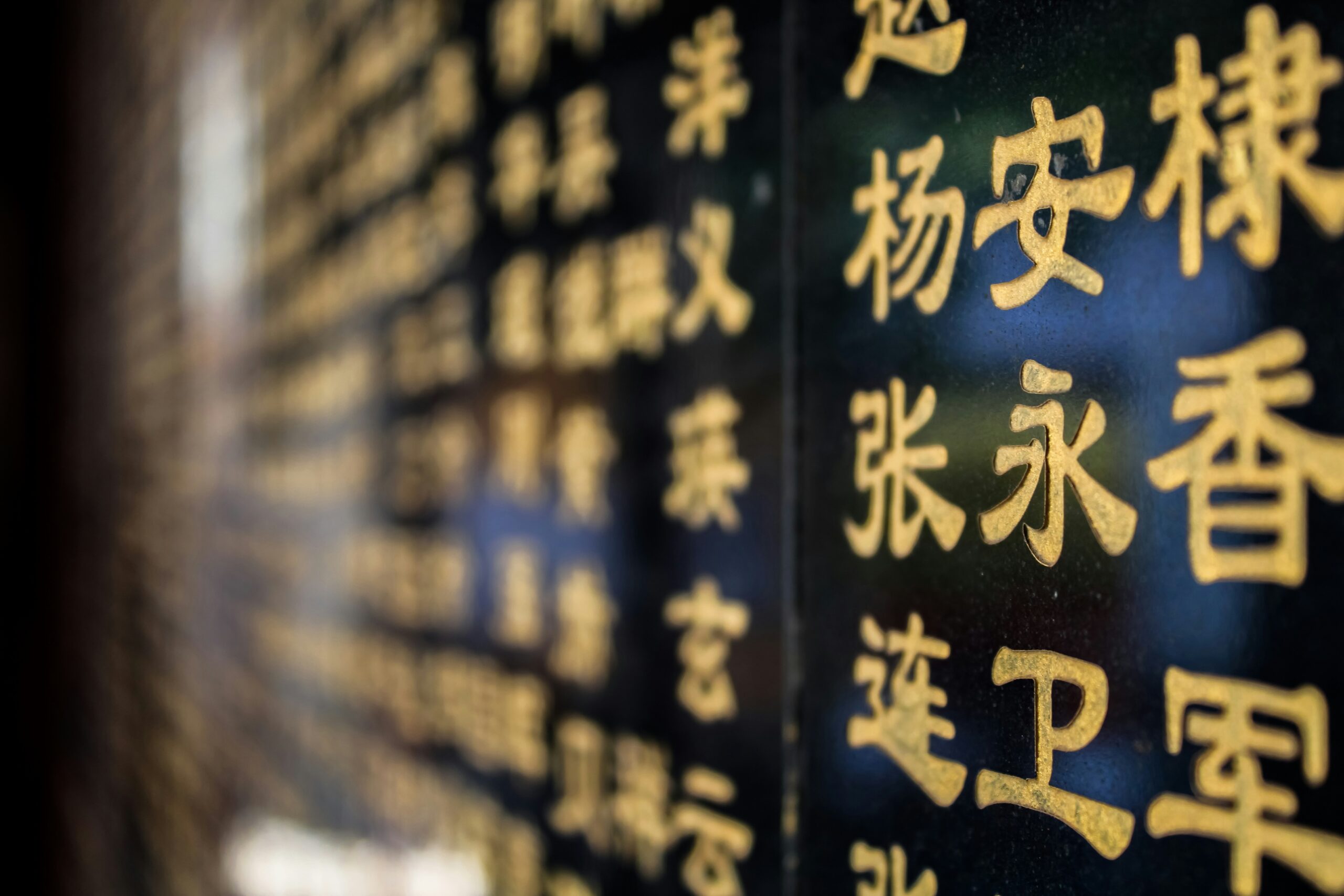
China is one of the most linguistically diverse countries in the world. While many people assume that “Chinese” is a single language, the reality is far more complex. China is home to a wide variety of languages and dialects, many of which are mutually unintelligible. These linguistic differences reflect the country’s long history, vast geography, and rich cultural diversity.
What Is the Chinese Language?
The term “Chinese” generally refers to a group of related language varieties rather than a single unified language. These are often categorised as part of the Sinitic language family, a branch of the Sino-Tibetan languages. Linguists identify between seven and thirteen major dialect groups depending on the classification system used, with hundreds of distinct local varieties spoken across the country.
The official language of China is Standard Mandarin, also known as Putonghua. It is based on the Beijing dialect and is used in government, education, and media across mainland China. Read more about Beijing’s history, culture and language in our complete guide to Beijing.
Major Chinese Language Groups
Mandarin (Putonghua)
Mandarin is by far the most widely spoken language in China, with over one billion speakers. It is the official language and is taught nationwide, making it the primary means of communication between people from different regions. Within Mandarin itself there are regional sub-groups — Northern, Southwestern, and Jianghuai Mandarin among them — meaning a Sichuan native and a Beijinger will sound noticeably different, though they can generally understand each other. For a closer look at Sichuan’s Southwestern Mandarin and the giant-panda heartland that produced it, see our guide to Sichuan.
Cantonese (Yue)
Spoken mainly in Guangdong province, Hong Kong, and Macau, Cantonese has around 80 million native speakers and a large diaspora presence worldwide. It is known for its rich tonal system — Cantonese uses six to nine tones depending on the classification, compared to Mandarin’s four — and its deep cultural significance in opera, cinema, and Cantopop music. Anyone working in business or media in Hong Kong will find Cantonese still dominates daily life, even as Mandarin use grows. For the geography, food and history behind this language, see our complete guide to Guangdong.
Wu (Including Shanghainese)
Wu is spoken by around 80 million people in eastern China, particularly in Shanghai, Zhejiang province, and southern Jiangsu. Shanghainese is the most prominent Wu variety and differs significantly from Mandarin in both pronunciation and vocabulary — to the point where a Shanghainese-speaking grandparent may struggle to follow a standard Mandarin broadcast. Wu speakers routinely switch between their local variety and Putonghua depending on context. Read more about Shanghai and its dialect in our complete guide to Shanghai.
Min (Including Hokkien and Teochew)
Min languages are spoken in Fujian province, parts of Taiwan, and large overseas Chinese communities across Southeast Asia — particularly in Singapore, Malaysia, and Indonesia. Hokkien and Teochew are the two best-known varieties. Min is notable for preserving ancient pronunciations that other Chinese language groups have lost over centuries, making it one of the most linguistically archaic of the major groups.
Hakka
Hakka is spoken by an estimated 40 to 50 million people, scattered across southern China including Guangdong, Fujian, and Jiangxi, as well as significant diaspora communities in Taiwan and Southeast Asia. The Hakka people have a distinctly migratory history within China, which explains why Hakka communities appear across multiple provinces rather than being concentrated in one region. This nomadic heritage is embedded in the name itself — Hakka means “guest families.”
Xiang and Gan
Xiang (Hunanese) is spoken by around 36 million people in Hunan province, while Gan is spoken by approximately 22 million in Jiangxi. Both are less internationally prominent but culturally significant — Mao Zedong spoke Xiang, and his strong regional accent was reportedly difficult for many Chinese listeners outside Hunan to follow.
How Many Tones Does Each Dialect Have?
Tone count is one of the most striking differences between Chinese language groups. Where Mandarin uses four tones plus a neutral tone, other varieties are considerably more complex:
- Mandarin: 4 tones + neutral tone
- Cantonese: 6 to 9 tones (depending on classification)
- Shanghainese (Wu): 5 tones
- Hokkien (Min): 7 to 8 tones
- Hakka: 6 tones
Tones are what make Chinese languages sound so distinct from one another, even beyond differences in vocabulary and grammar. A Mandarin speaker listening to Cantonese is not just hearing unfamiliar words — they are hearing a fundamentally different melodic pattern.
Dialects vs Languages: What’s the Difference?
In China, the distinction between “dialect” and “language” is often political rather than purely linguistic. Cantonese and Mandarin are officially classified as fangyan — regional varieties of Chinese — yet a Cantonese speaker and a Mandarin speaker cannot understand each other at all in spoken conversation. By the standard linguistic criterion of mutual intelligibility, they function as separate languages.
The political motivation for grouping them together is national unity: labelling these varieties as dialects of a single “Chinese language” reinforces a shared cultural and national identity, anchored by the common writing system. As the linguist’s oft-cited observation goes — “a language is a dialect with an army and a navy.”
The Role of Chinese Characters
One unifying factor across Chinese languages is the use of Chinese characters (Hanzi). While spoken forms vary widely, written Chinese provides a common communication system understood across regional boundaries. Simplified characters are used in mainland China, while traditional characters are used in Taiwan and Hong Kong.
This shared script has served as a unifying force for millennia — historically, it even functioned as a diplomatic written language across East Asia, allowing Chinese, Japanese, Korean, and Vietnamese scholars to communicate in writing despite speaking entirely different languages. The writing system transcends the spoken divide in a way that spoken Mandarin alone cannot.
Minority Languages in China
Beyond Sinitic languages, China recognises 55 ethnic minority groups, many with their own distinct languages. Some of the most widely spoken include:
Zhuang
Approximately 16 million speakers in Guangxi; the most widely spoken minority language in China.
Uyghur
Around 10 million speakers in Xinjiang; a Turkic language entirely unrelated to Chinese.
Tibetan
Spoken by around 6 million people across the Tibetan Plateau.
Mongolian
Spoken in Inner Mongolia and closely related to the language of Mongolia itself.
These languages belong to entirely different linguistic families — Turkic, Tibeto-Burman, Mongolic — and further illustrate the remarkable scale of China’s linguistic diversity.
Language Policy in China
The Chinese government has actively promoted Mandarin as a unifying national language since the 1950s, introducing Putonghua to the national curriculum and standardising pronunciation through the Pinyin romanisation system. Government targets have aimed for 85% Putonghua proficiency across the national population.
Despite this, regional varieties remain deeply embedded — particularly in rural communities, among older generations, and in regions with strong cultural identities like Guangdong and Fujian. The coexistence of official Mandarin promotion alongside enduring regional varieties is one of China’s most fascinating social dynamics.
What This Means for Mandarin Learners
If you are learning Mandarin, China’s linguistic diversity is actually reassuring in one sense: Standard Putonghua gives you access to the entire country. You do not need to learn Cantonese to travel through Guangdong or Hokkien to spend time in Fujian — Mandarin is understood everywhere in mainland China. Understanding that regional varieties exist does help explain the accent variation you will encounter in Chinese media, films, and conversations with speakers from different provinces.
For a closer look at the historical forces that shaped China’s regions and languages, see our guide to the major Chinese dynasties. If you are ready to start speaking, explore our essential Mandarin phrases for travel, or browse our Mandarin for Travellers course or browse all programmes to get started with a teacher.
In Yunnan, twenty-five officially recognised ethnic minorities each have their own language alongside Standard Mandarin — Bai, Naxi, Dai and Yi among them.
For a province-deep look at where Lanyin Mandarin is spoken — including Lanzhou, the Hexi Corridor and the Silk Road — see our complete guide to Gansu.